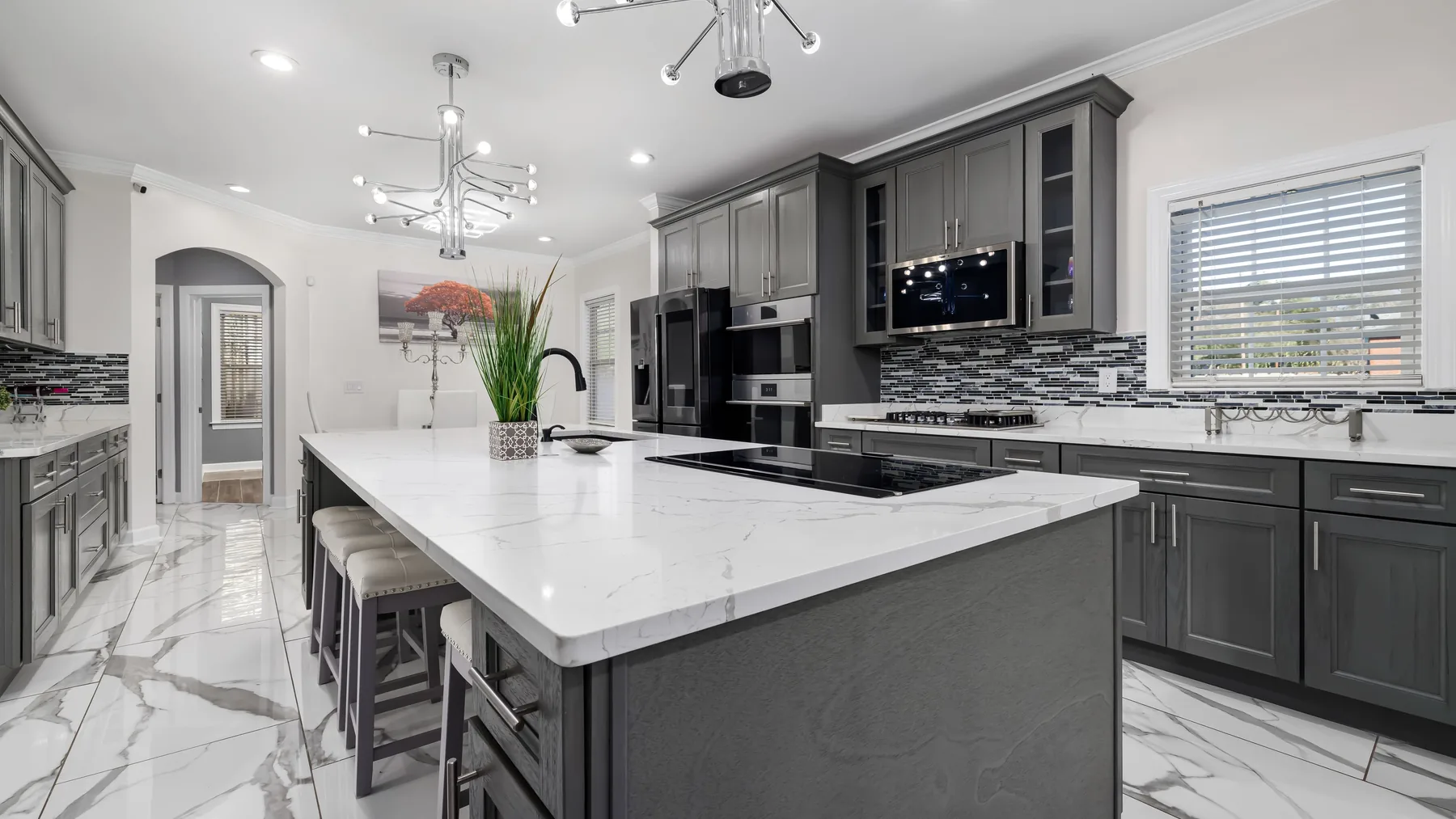
In a Smoky Mountain cabin kitchen, counter space is precious and clutter is the enemy, especially when the kitchen has to look spotless for the next guest check-in. That is why two features keep showing up in the Sevierville cabin kitchens we build: the appliance garage and the dedicated coffee bar. Both hide the daily clutter of small appliances behind custom cabinetry and give a rental cabin or a mountain home that photo-ready, high-end feel. Here is how they work and why they fit cabin life in Sevier County so well.
An appliance garage is a cabinet, usually sitting on the countertop against the backsplash, with a roll-up tambour door or a lift-up door that hides the small appliances inside. Instead of a toaster, blender, and air fryer cluttering the counter, they live in the garage, plugged in and ready, and the door pulls down to hide them in seconds. For a Gatlinburg or Pigeon Forge rental cabin, that means a cleaning crew can reset the kitchen to a clean, staged look between guests in moments.
Short-term rental kitchens in the Smokies have a specific challenge: guests want a fully equipped kitchen, but a counter full of appliances photographs as cluttered and feels cramped. An appliance garage squares that circle, keeping everything available while presenting clean counters in listing photos and at check-in. For cabin owners who manage turnovers, a defined home for each appliance also means fewer missing items and a faster, more consistent reset. It is a small feature that pays off every single booking.
The coffee bar has become one of the most requested features in Sevierville cabin kitchens, and for good reason. Guests on a mountain getaway love waking up to a dedicated coffee station, and owners love that it keeps the mess in one spot. A good coffee bar combines counter space for the maker and mugs, cabinetry or open shelving above for cups and supplies, often a small beverage fridge below, and an outlet or two built in. In a cabin that sleeps a large group, it keeps the morning crowd out of the main work zone.
Smoky Mountain cabins often sleep ten, twelve, or more, and the kitchen has to handle a crowd. That changes how we design these features. A coffee bar for a large rental benefits from room for a full-size maker plus a single-serve machine, generous mug and supply storage, and placement away from the cooking triangle so morning coffee traffic does not collide with breakfast. An appliance garage sized for a big kitchen might hold a stand mixer and multiple small appliances. We scale these to how the cabin is actually used.
These features see heavy, varied use from guests who are not always gentle, plus the real mountain humidity of the Smokies. The tambour door on an appliance garage should be a quality wood or composite that will not warp or stick in damp weather, and the interior should have a durable, wipeable finish. A coffee bar counter takes spills and heat, so a sealed, forgiving surface matters. Building these for the reality of rental turnover rather than light home use is what keeps them looking good after a busy season.
The success of both features comes down to planning outlets and placement early. An appliance garage and a coffee bar each need power inside or right behind them, which has to be designed in before the cabinets are built and ideally before the electrical is finalized. Placement matters too: the coffee bar near where guests gather in the morning, the appliance garage near the main prep zone. Retrofitting power later is possible but messier, so these are decisions to make at the design stage of a cabin kitchen.
As custom features, an appliance garage and a coffee bar add to the cabinet budget, but both are modest relative to the overall kitchen and both earn their keep in a rental. Cleaner listing photos, faster turnovers, and the premium feel that earns better reviews all translate to bookings for a Smoky Mountain cabin. For a primary mountain home, they simply make daily life tidier. Either way, they are among the higher-return small upgrades in a cabin kitchen.
Appliance garages come with a few door mechanisms, and the right one depends on the cabin. A roll-up tambour door is the classic and tucks away cleanly, which suits a tight Pigeon Forge cabin kitchen. A lift-up or flip-up door is simple and sturdy but needs clearance above. Pocket doors that slide back into the cabinet give an open, gallery feel but cost more. For a rental that guests operate, we lean toward the most intuitive, hardest-to-break option, because a confused guest is a support call for the cabin owner.
These features should feel built-in, not bolted-on, which matters in a log or timber-frame Smoky Mountain home. We match the appliance garage and coffee bar cabinetry to the kitchen's door style, stain, and hardware so they read as part of the original design. In a rustic cabin, a reclaimed or knotty wood face keeps the mountain character; in a more modern Wears Valley build, clean painted fronts fit better. The goal is a feature that looks intentional and elevates the whole kitchen rather than standing out as an add-on.
While rentals drive a lot of these requests, Sevierville and Seymour homeowners who live here full time love them too. An appliance garage keeps a everyday kitchen tidy without hauling appliances in and out of a pantry, and a coffee bar turns a corner of the kitchen into a little ritual spot each morning. The same features that reset quickly for guests simply make daily life smoother in a mountain home, so they are worth considering whether or not the cabin is ever rented.
Appliance garages and coffee bars solve the exact problems a Smoky Mountain cabin kitchen faces: limited counter space, the need to look staged for guests, and the demands of a big crowd. Designed with the right materials, power, and placement for cabin turnover and our mountain humidity, they make a kitchen both more functional and more photogenic. We design and build both as part of custom cabinetry for cabins and homes across Sevierville and the Smokies.
For Smoky Mountain rentals, yes. They keep small appliances available but hidden behind a roll-up door, so cleaning crews can reset the kitchen to a clean, staged look between guests in seconds and listing photos show uncluttered counters. A defined home for each appliance also makes turnovers faster and more consistent, which pays off every booking.
For a cabin that sleeps a large group, a good coffee bar has counter space for a full-size maker plus often a single-serve machine, generous mug and supply storage above, frequently a small beverage fridge below, and built-in outlets. Placing it away from the cooking zone keeps the morning coffee crowd from colliding with breakfast prep in a busy Smoky Mountain cabin.
Custom appliance garages and coffee bars for cabins and homes across Sevierville and the Smokies.